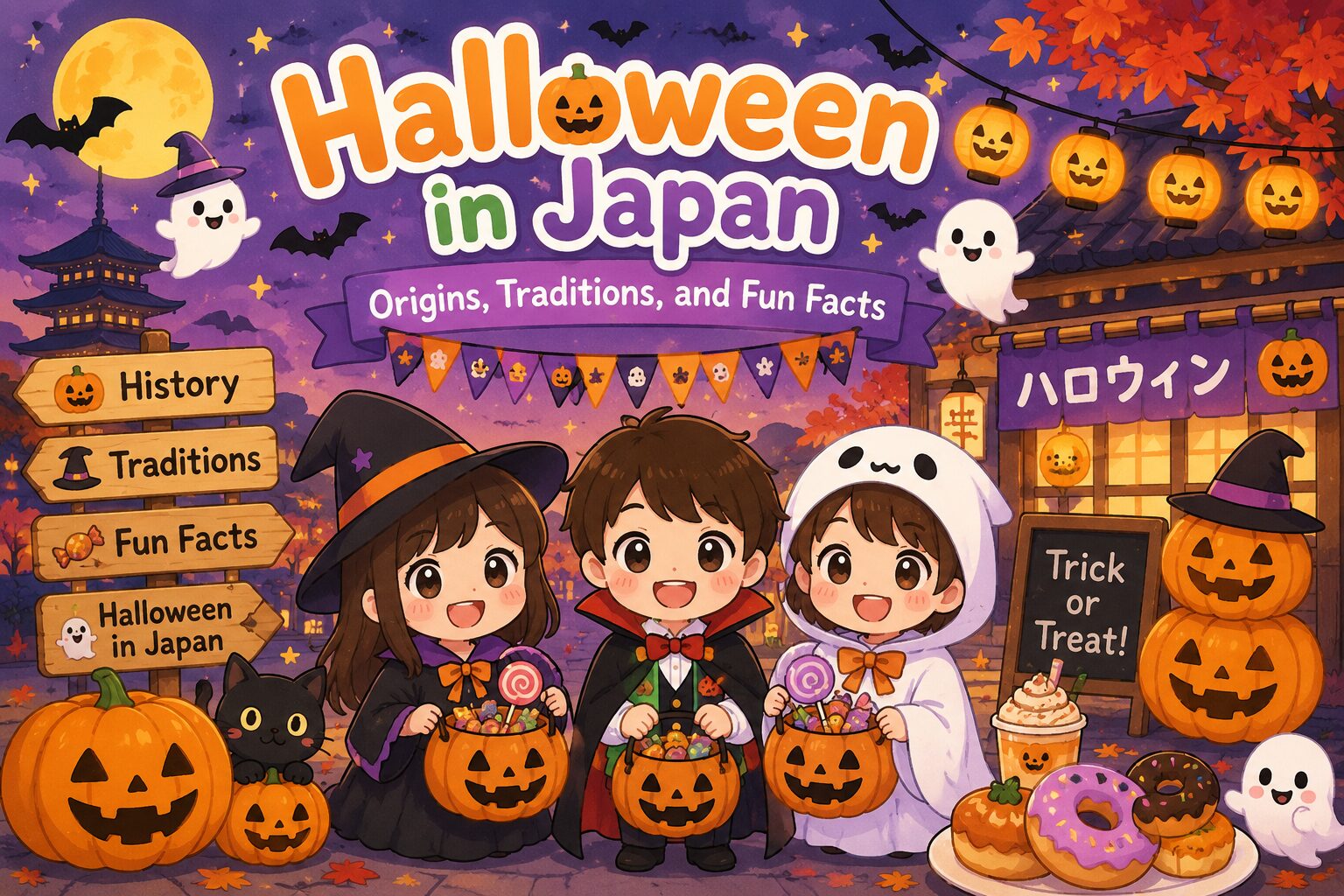
Halloween in Japan Explained: Origins, Traditions, and Fun Facts
Why Is Halloween Celebrated in Japan?
Halloween is now one of the most recognizable autumn events in Japan. During October, stores are filled with pumpkin decorations, theme parks hold special events, restaurants offer seasonal sweets, and people of all ages enjoy dressing up in costumes.
However, Halloween in Japan looks very different from the traditional celebrations found in countries such as the United States, Ireland, and the United Kingdom. Door-to-door trick-or-treating is still uncommon in many Japanese neighborhoods, while costume events, limited-edition products, and entertainment experiences play a much larger role.
In this article, you will discover where Halloween came from, how familiar traditions such as costumes and jack-o’-lanterns developed, and how Japan transformed the holiday into its own distinctive seasonal celebration.
1. Where Did Halloween Come From?
Modern Halloween was not created from a single tradition. It developed over many centuries through a mixture of seasonal customs, Christian observances, folk beliefs, and community celebrations.
The ancient Celtic festival of Samhain is often discussed as one of its important historical influences. Later, Christian traditions connected with All Saints’ Day and All Souls’ Day also shaped the customs that eventually became associated with Halloween.
1-1. Samhain Marked the End of the Harvest Season
Samhain was observed in parts of ancient Ireland, Britain, and other Celtic regions around the end of October. It marked the end of the harvest season and the beginning of the darker half of the year.
Because this period represented a major seasonal boundary, later accounts connected it with beliefs about spirits and the relationship between the living and the dead. Fires, gatherings, and protective customs became part of the traditions associated with this time of year.
1-2. Christian Traditions Influenced the Name Halloween
The word Halloween developed from the expression All Hallows’ Eve, meaning the evening before All Saints’ Day on November 1.
The word hallow refers to a holy person or saint. Over time, All Hallows’ Eve was shortened into the modern name Halloween.
Customs associated with October 31, All Saints’ Day, and All Souls’ Day gradually blended with older regional traditions. This is why Halloween today contains elements of religion, folklore, remembrance, fear, and celebration.
1-3. Costumes Developed from Several Different Customs
Halloween costumes are sometimes explained as a way for people to hide from spirits or make themselves look like supernatural beings. However, the modern custom did not come from only one practice.
Regional traditions such as wearing masks, disguising oneself, performing for neighbors, and visiting homes for food or gifts all contributed to the development of Halloween costumes.
Today, costumes are no longer limited to ghosts, witches, and monsters. People also dress as movie characters, animals, historical figures, and popular anime or game characters.
1-4. Trick-or-Treating Has More Than One Possible Origin
The modern phrase trick or treat became widely popular in North America during the 20th century. Its earlier influences may include several European customs in which people visited homes in return for food, small gifts, prayers, songs, or performances.
One frequently mentioned tradition is souling, in which people received small cakes in exchange for prayers for the dead. Another is guising, where children or young people wore disguises and performed before receiving food or money.
These customs gradually evolved into the child-friendly practice of visiting decorated homes and receiving sweets.
1-5. Jack-o’-Lanterns Were Not Always Made from Pumpkins
Before pumpkins became the best-known symbol of Halloween, people in Ireland and parts of Britain carved vegetables such as turnips and placed lights inside them.
Irish and Scottish immigrants brought these traditions to North America in the 19th century. Pumpkins were larger, easier to carve, and widely available, so they gradually replaced turnips as the most popular choice.
The name jack-o’-lantern is also connected with old folk stories about a wandering figure often called Stingy Jack, although the details of the legend vary.
1-6. Immigration Helped Shape Modern Halloween
European immigrants brought many seasonal customs to the United States and Canada during the 19th century. Over time, these practices blended into a community celebration involving costumes, games, parties, carved pumpkins, and sweets.
During the 20th century, movies, television, advertising, and popular culture helped spread the modern image of Halloween around the world.
Japan later adopted many of these recognizable elements, but developed a version of Halloween that places greater emphasis on costumes, shopping, theme parks, seasonal food, and organized events.
2. 15 Fascinating Facts About Halloween
Halloween has evolved over thousands of years, and many of its most familiar traditions have surprising stories behind them. Here are some interesting facts that explain why Halloween looks the way it does today.
1. Halloween Is Always on October 31
Unlike many holidays, Halloween is celebrated on the same date every year. It takes place on October 31, the evening before All Saints’ Day.
2. Orange and Black Have Special Meanings
Orange represents the autumn harvest and pumpkins, while black is commonly associated with night, mystery, and the supernatural.
3. Pumpkins Were Not the Original Lanterns
People in Ireland originally carved turnips instead of pumpkins. Pumpkins became popular after the tradition spread to North America.
4. Jack-o’-Lanterns Come from Irish Folklore
The famous carved pumpkin is linked to stories about Stingy Jack, a legendary figure said to wander the earth carrying a lantern.
5. Costumes Continue to Evolve
Halloween costumes were once mainly ghosts, witches, and monsters. Today, superheroes, movie characters, anime figures, and humorous costumes are just as common.
6. Trick-or-Treating Is Mostly for Children
In many countries, children visit decorated homes to collect candy. Adults often join Halloween through parties, haunted attractions, and costume events instead.
7. Candy Is a Huge Part of Halloween
Halloween is one of the biggest candy-selling seasons in countries such as the United States, with families preparing treats for visiting children.
8. Haunted Houses Are Popular Attractions
Many amusement parks and entertainment venues create haunted houses and spooky experiences throughout October.
9. Black Cats Became Halloween Symbols
Black cats have long appeared in European folklore and later became closely associated with Halloween imagery, especially alongside witches.
10. Bats Are Another Classic Symbol
Large bonfires once attracted insects, which in turn attracted bats. Over time, bats became another familiar Halloween image.
11. Apples Also Have Halloween Traditions
Games such as apple bobbing have been enjoyed for centuries and remain part of Halloween celebrations in some regions.
12. Theme Parks Celebrate Halloween Too
Major theme parks around the world host seasonal parades, costume events, haunted attractions, and limited-time shows during Halloween.
13. Decorations Become Bigger Every Year
Many families decorate their homes with lights, skeletons, ghosts, pumpkins, and other seasonal displays throughout October.
14. Halloween Is Celebrated Around the World
Although Halloween has Celtic roots, it is now celebrated in many countries, with each culture adding its own traditions and style.
15. Every Country Celebrates It Differently
From neighborhood trick-or-treating in North America to large costume events in Japan, Halloween continues to evolve while reflecting local culture.
3. How Halloween Became Popular in Japan
Unlike countries where Halloween has been celebrated for generations, Halloween is a relatively new cultural event in Japan. Rather than focusing on trick-or-treating, Japan embraced Halloween as a season of costumes, entertainment, themed food, and limited-time events.
Today, Halloween is one of Japan’s biggest seasonal celebrations, with shopping centers, theme parks, restaurants, and tourist destinations creating special experiences throughout October.
3-1. Halloween First Grew Through Businesses and Theme Parks
Halloween began attracting attention in Japan during the late 20th century, when businesses introduced seasonal decorations and special promotions. Theme parks, shopping malls, and department stores played a major role in making Halloween familiar to Japanese families.
Instead of emphasizing its religious background, Halloween was introduced as a fun seasonal event that anyone could enjoy.
3-2. Costumes Became the Main Attraction
One of the biggest differences between Halloween in Japan and many Western countries is the importance of costumes. Dressing up is often the main activity, with people spending weeks preparing creative outfits for parties, theme park visits, and photography.
Popular costumes include anime characters, video game heroes, movie characters, and original designs. Many people also enjoy group costumes with friends or family.
3-3. Halloween Is More About Events Than Trick-or-Treating
While children in some international schools and local communities enjoy trick-or-treating, it is not a nationwide tradition in Japan.
Instead, many people celebrate by attending Halloween events, visiting theme parks, taking part in costume contests, or enjoying seasonal menus at cafés and restaurants.
This makes Halloween in Japan feel more like a public festival than a neighborhood tradition.
3-4. Seasonal Food Is Everywhere
October brings a wide variety of Halloween-themed products to Japan. Convenience stores, cafés, bakeries, and restaurants release limited-edition sweets, drinks, and desserts featuring pumpkins, purple sweet potatoes, chocolate, and autumn flavors.
Many visitors are surprised by how quickly stores switch from Halloween decorations to Christmas displays as soon as November begins.
3-5. Theme Parks Create Some of Japan’s Biggest Halloween Events
Major theme parks host special Halloween celebrations every year, featuring seasonal decorations, exclusive shows, character costumes, haunted attractions, and nighttime entertainment.
For many visitors, these events are one of the highlights of traveling to Japan during October.
3-6. Halloween Continues to Evolve in Japan
Halloween in Japan changes every year as new trends emerge. Social media, popular culture, and seasonal marketing continue to influence how people celebrate.
Although its style is different from traditional Halloween celebrations in North America or Europe, Japan has created its own version that reflects modern Japanese culture and creativity.
Travel Tip
If you’re visiting Japan in October, check whether your destination is hosting a Halloween event. Theme parks, shopping districts, aquariums, and even some castles and museums often organize limited-time seasonal attractions that are popular with both locals and international visitors.
4. What Makes Halloween in Japan Different?
If you’ve celebrated Halloween in countries such as the United States, Canada, Ireland, or the United Kingdom, you may notice that Halloween in Japan feels quite different.
Although you’ll still find pumpkins, ghosts, witches, and plenty of orange decorations, Japan has developed its own unique way of celebrating the season. Here are some of the biggest differences international visitors often notice.
1. Trick-or-Treating Is Rare
Unlike many Western countries, children in Japan generally do not go door to door collecting candy on Halloween night. Some international schools, local communities, and private events organize trick-or-treat activities, but they are not common nationwide.
2. Costumes Are the Main Attraction
Halloween in Japan is often centered around dressing up. Many people spend weeks planning creative costumes and enjoy taking photos with friends at events, theme parks, and popular sightseeing areas.
3. Seasonal Shopping Starts Early
By September, stores across Japan begin selling Halloween decorations, sweets, stationery, costumes, and home decorations. Convenience stores, supermarkets, and 100-yen shops all join the celebration.
4. Limited-Time Food Is Everywhere
Restaurants, cafés, bakeries, and convenience stores release Halloween-themed desserts, drinks, and snacks throughout October. Many products are available for only a few weeks.
5. Theme Parks Fully Embrace Halloween
Major theme parks transform into Halloween destinations with seasonal decorations, parades, character costumes, haunted attractions, and exclusive merchandise.
6. Public Manners Are Becoming More Important
Large public gatherings once attracted huge crowds in some entertainment districts. Today, many cities encourage visitors to celebrate at organized events while respecting local rules and public spaces.
7. Social Media Shapes Modern Halloween
Sharing costume photos and visiting beautifully decorated locations has become an important part of Halloween in Japan. Many seasonal events are designed with photography in mind.
8. Christmas Arrives Almost Overnight
One of the biggest surprises for many visitors is how quickly stores change their decorations. As soon as Halloween ends on October 31, Christmas displays begin appearing across Japan.
Did You Know?
Many international visitors expect Halloween in Japan to be similar to Halloween in North America. In reality, Japan has created a celebration that focuses much more on costumes, seasonal entertainment, shopping, and themed food than on neighborhood trick-or-treating.
5. Final Thoughts
Halloween has traveled a long way from its ancient Celtic origins to become one of the world’s most recognizable seasonal celebrations.
In Japan, the holiday has developed its own identity. Instead of focusing primarily on trick-or-treating, Halloween is celebrated through costumes, themed events, seasonal food, shopping, and family-friendly entertainment.
Whether you’re visiting Japan in October or simply curious about Japanese culture, experiencing Halloween here offers a fascinating look at how international traditions can evolve in new and creative ways.
Frequently Asked Questions
When is Halloween celebrated in Japan?
Halloween is celebrated on October 31, just like in many other countries. Seasonal events and decorations usually begin appearing in September and continue throughout October.
Do children go trick-or-treating in Japan?
Trick-or-treating is not a common nationwide tradition. However, some international schools, neighborhoods, shopping centers, and private events organize Halloween activities for children.
Why do Japanese people enjoy Halloween?
Many people enjoy Halloween as a fun seasonal event that includes costumes, limited-edition food, decorations, theme park events, and opportunities to spend time with friends and family.
Where can I experience Halloween in Japan?
Popular places include major theme parks, shopping districts, department stores, aquariums, and tourist attractions that host special Halloween events throughout October.
Is Halloween in Japan the same as Halloween in the United States?
No. While both countries celebrate Halloween on October 31, Japan focuses more on costumes, entertainment, seasonal shopping, and themed attractions, whereas neighborhood trick-or-treating remains the defining tradition in many parts of the United States.