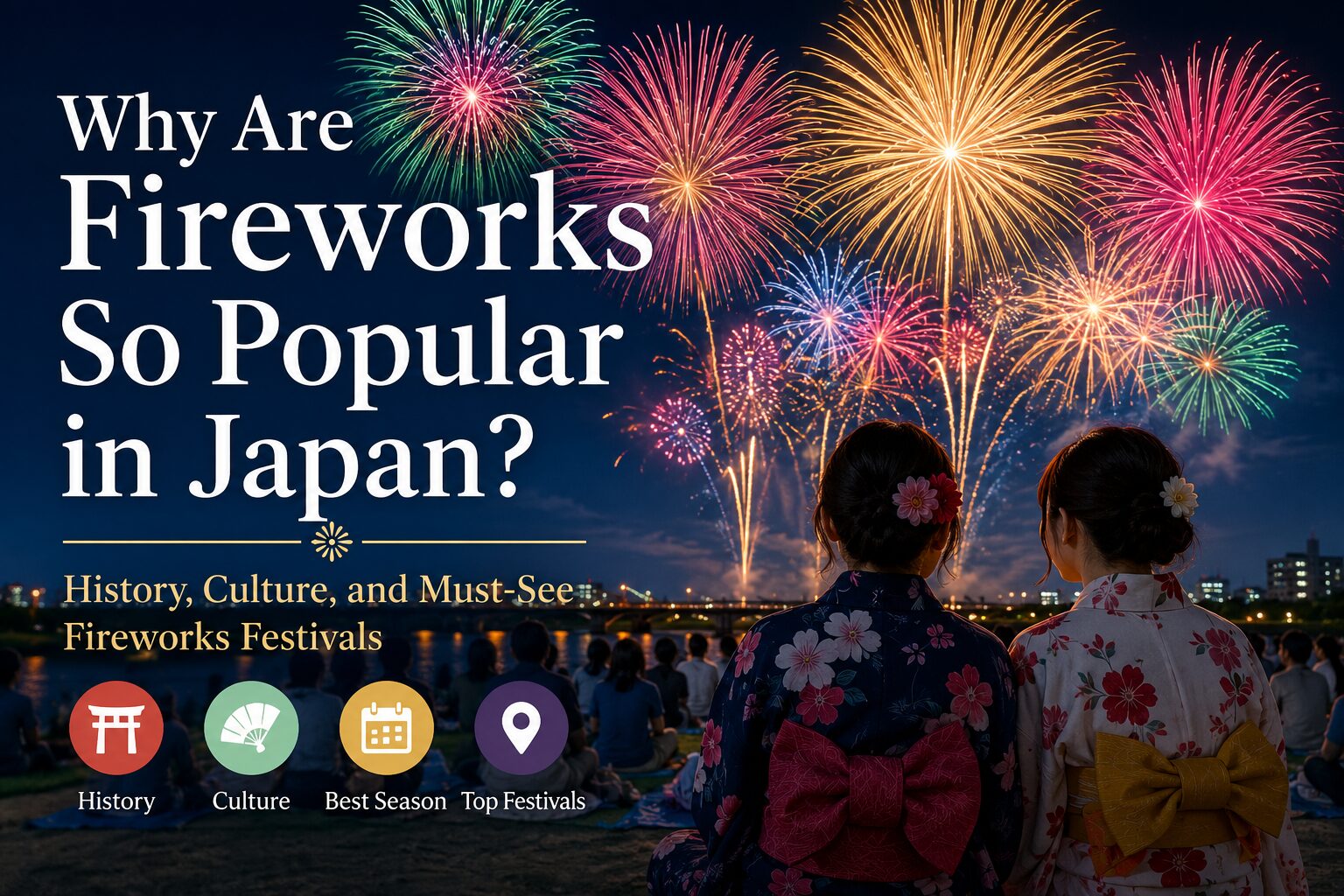
Japanese Fireworks Explained: History, Culture, and Festival Facts
Why Are Fireworks So Special in Japan?
Every summer, millions of people across Japan gather to watch spectacular hanabi (fireworks) light up the night sky. While fireworks are popular around the world, Japan has developed a unique fireworks culture that combines history, craftsmanship, tradition, and community celebrations.
Many visitors are surprised to learn that Japanese fireworks are more than just entertainment. They are connected to centuries-old festivals, skilled artisans, and cultural traditions that continue to shape summer celebrations today.
In this guide, you’ll discover how fireworks became a symbol of Japanese summer, explore their fascinating history, learn what makes Japanese fireworks different from those in other countries, and find helpful tips for enjoying a fireworks festival during your visit to Japan.
1. The History of Fireworks in Japan
The story of Japanese fireworks begins long before modern summer festivals. Fireworks evolved from the invention of gunpowder in China, spread through Europe, and eventually reached Japan, where they developed into one of the country’s most beloved seasonal traditions.
Unlike many countries, Japan transformed fireworks into an art form. Rather than focusing only on loud explosions, Japanese pyrotechnicians became famous for creating perfectly round, colorful displays that can be admired from every direction.
Today, fireworks festivals attract millions of visitors every summer, but their origins are closely connected to history, remembrance, and local traditions.
Gunpowder Began the Story
The history of fireworks starts with the invention of gunpowder in ancient China. Although it was first developed for military purposes and signaling, people eventually discovered that controlled explosions could also be used for celebrations and ceremonies.
Over time, fireworks spread to Europe, where countries such as Italy helped develop colorful display techniques that later influenced modern fireworks around the world.
Fireworks Arrived in Japan
Fireworks were introduced to Japan during the Sengoku period through trade with European merchants and missionaries. At first, gunpowder technology was mainly used for firearms and signaling, but it gradually became part of celebrations and public events.
Historical records show that Tokugawa Ieyasu, the founder of the Tokugawa shogunate, watched a fireworks display in the early 17th century, helping popularize fireworks among Japan’s ruling class.
How Fireworks Became a Summer Tradition
One of the most important moments in Japanese fireworks history came in 1733, when fireworks were launched during the Ryogoku River Opening Festival in Edo (modern-day Tokyo). The event honored people who had died during famine and disease while also praying for peace and good health.
This tradition eventually developed into today’s famous Sumida River Fireworks Festival, one of Japan’s largest and most well-known fireworks events.
The Legacy Continues Today
Modern Japanese fireworks festivals combine centuries of history with advanced craftsmanship. Every summer, local communities organize festivals that celebrate tradition while showcasing some of the world’s finest fireworks displays.
For many Japanese people, watching fireworks is not only a form of entertainment but also a way to experience the atmosphere of summer, spend time with family and friends, and appreciate a tradition that has been passed down for generations.
2. 20 Fascinating Facts About Japanese Fireworks
Japanese fireworks are admired around the world for their precision, beauty, and craftsmanship. Many visitors enjoy the colorful displays without realizing how much skill, science, and tradition go into every shell launched into the sky.
Here are 20 fascinating facts that will help you appreciate Japanese fireworks even more the next time you attend a hanabi taikai (fireworks festival).
1. Every Color Comes from Chemistry
The brilliant colors of fireworks are created by adding different metal compounds to the pyrotechnic mixture. For example, strontium produces red, barium creates green, and copper is used to make blue.
2. Blue Is the Hardest Color to Create
Blue fireworks require extremely precise temperatures during combustion. Even small changes can affect the final color, making blue one of the greatest challenges for fireworks makers.
3. Japanese Fireworks Are Designed to Be Perfectly Round
Japanese pyrotechnicians carefully arrange the stars inside each shell so the explosion forms a nearly perfect sphere that looks beautiful from every angle.
4. Every Firework Shell Is Handmade
Although some modern equipment is used, much of the assembly process still depends on skilled craftspeople who carefully place each component by hand.
5. Humidity Is a Firework’s Enemy
Fireworks must be stored in dry conditions because moisture can reduce the performance of the gunpowder and affect the final display.
6. The Whistling Sound Is Intentional
Some fireworks include special whistle effects that create the familiar rising sound before the explosion, building excitement among the audience.
7. Large Shells Reach Incredible Heights
The biggest fireworks used at Japanese festivals can climb hundreds of meters into the sky before exploding into massive displays.
8. Shaped Fireworks Require Advanced Design
Heart-shaped, smiley-face, and character fireworks must be carefully engineered so their patterns appear correctly when viewed from the ground.
9. Sound Is Part of the Experience
The powerful boom is just as important as the light. Many spectators say they remember the deep vibrations as much as the colorful explosions.
10. Timing Is Carefully Choreographed
Modern fireworks festivals often synchronize fireworks with music, creating performances that combine sound, rhythm, and color.
11. Fireworks Competitions Are Popular in Japan
Several cities host national competitions where fireworks companies showcase their newest techniques and artistic designs.
12. Famous Fireworks Makers Have Centuries of History
Some Japanese fireworks companies have been producing fireworks for generations, preserving traditional skills while embracing modern technology.
13. The Audience Once Cheered “Tamaya!” and “Kagiya!”
These famous cheers originated from two legendary fireworks companies during the Edo period. Visitors can still hear these traditional calls at some festivals today.
14. Every Festival Has Its Own Style
Some festivals focus on artistic beauty, while others are famous for enormous shells, synchronized music, or rapid-fire finales.
15. Rivers Make Ideal Venues
Many Japanese fireworks festivals are held along rivers because they provide wide, open spaces and beautiful reflections on the water.
16. Summer Is Fireworks Season
Although fireworks can be enjoyed throughout the year, most major festivals take place between July and August.
17. Millions of People Attend Every Year
Japan’s largest fireworks festivals attract hundreds of thousands, and sometimes more than a million, spectators in a single evening.
18. Local Communities Help Organize Festivals
Many events are supported by local governments, businesses, and volunteers, making fireworks festivals important community celebrations.
19. Fireworks Are a Symbol of Japanese Summer
For many people in Japan, fireworks, yukata, food stalls, and warm evenings together represent the feeling of summer.
20. Every Display Is Temporary
Each firework lasts only a few seconds, which is one reason they are so memorable. Their brief beauty reflects the Japanese appreciation for moments that cannot be repeated.
3. What to Expect at a Japanese Fireworks Festival
Attending a hanabi taikai (Japanese fireworks festival) is much more than watching fireworks. It’s a cultural experience filled with traditional clothing, local food, lively crowds, and unforgettable summer memories.
If you’re planning to visit a fireworks festival in Japan, here are some common experiences and useful tips to help you know what to expect.
1. Arrive Early for a Good Viewing Spot
Popular fireworks festivals attract huge crowds. Many people arrive several hours before the show begins to reserve a comfortable place with a picnic sheet.
2. Many Visitors Wear Yukata
A lightweight summer kimono called a yukata is traditional festival clothing. You’ll often see families, couples, and friends dressed in colorful yukata throughout the event.
3. Food Stalls Are Everywhere
Festival food is part of the experience. Popular choices include yakisoba, takoyaki, grilled corn, chocolate bananas, shaved ice, and many other seasonal treats.
4. Bring Cash
Although cashless payments are becoming more common in Japan, many temporary festival stalls still accept cash only.
5. The Sound Is Much More Powerful Than You Expect
Watching videos online cannot fully prepare you for the deep boom that echoes through the air. You don’t just hear the fireworks—you can often feel them.
6. Light Travels Faster Than Sound
If you’re watching from a distance, you’ll see the fireworks explode before hearing the loud bang a few seconds later.
7. Smoke Can Block the View
Depending on the wind direction, smoke from earlier fireworks may temporarily hide the next display. Even professional photographers have to work around changing conditions.
8. Taking Great Photos Is Harder Than It Looks
Fireworks are beautiful in person, but capturing their colors and timing with a smartphone can be surprisingly difficult.
9. Children React in Different Ways
Some children are amazed by the colorful displays, while others are surprised by the loud explosions. Both reactions are common at Japanese festivals.
10. Expect Crowds After the Finale
When the last fireworks fade, thousands of people leave at the same time. Train stations and nearby roads can become extremely crowded, so patience is essential.
11. Summer Evenings Can Still Be Hot
Even after sunset, temperatures and humidity often remain high. Bringing water, a handheld fan, and staying hydrated will make your evening much more comfortable.
12. Mosquitoes Are Common Near Rivers
Since many fireworks festivals are held along rivers, it’s a good idea to use insect repellent, especially if you’re staying until the end of the event.
13. Respect Local Rules
Follow staff instructions, dispose of your trash properly, and avoid blocking walkways. Japanese festivals are enjoyable because visitors generally respect shared spaces.
14. The Grand Finale Is Worth Waiting For
Most festivals end with a spectacular sequence of rapid-fire fireworks that fills the entire sky. It’s often the highlight of the evening and leaves the biggest impression.
Travel Tip
If you’re visiting Japan during July or August, attending at least one fireworks festival is highly recommended. Arrive early, bring some cash, wear comfortable clothing, and be prepared for large crowds after the event. The experience is one of the best ways to enjoy Japanese summer culture.
4. Best Fireworks Festivals in Japan
Japan is home to hundreds of fireworks festivals every year, ranging from small local celebrations to world-famous events that attract more than a million visitors. If you’re planning a summer trip to Japan, these festivals are among the best places to experience traditional hanabi.
Here are some of the country’s most famous fireworks festivals and what makes each one special.
1. Sumida River Fireworks Festival (Tokyo)
One of Japan’s oldest and most famous fireworks festivals, dating back to the Edo period. Hundreds of thousands of spectators gather along the Sumida River every summer to watch spectacular displays.
2. Nagaoka Fireworks Festival (Niigata)
Known for its emotional atmosphere and enormous fireworks, this festival was created to honor those lost during World War II and to celebrate hopes for peace and recovery.
3. Omagari Fireworks Competition (Akita)
Rather than being only a festival, Omagari is Japan’s most prestigious fireworks competition, where the country’s top pyrotechnic companies compete with original designs and advanced techniques.
4. Tsuchiura All Japan Fireworks Competition (Ibaraki)
Held every autumn, this nationally recognized competition showcases innovative fireworks and attracts professional fireworks makers from across Japan.
5. Miyajima Water Fireworks Legacy
Although the famous water fireworks are no longer held, Miyajima remains one of Japan’s most iconic places to enjoy traditional scenery, especially around the famous floating torii gate.
6. Local Festivals Across Japan
Large festivals are impressive, but smaller local fireworks events often provide a more relaxed atmosphere with easier access, fewer crowds, and an authentic community experience.
Planning Your Visit
- Most major fireworks festivals are held from late July through August.
- Check the official festival website before traveling, as dates may change because of weather.
- Reserve accommodation well in advance, especially for famous events.
- Public transportation is usually the easiest way to reach the venue.
- Expect very crowded trains immediately after the fireworks end.
5. Final Thoughts
Japanese fireworks are much more than colorful explosions in the night sky. They represent centuries of history, remarkable craftsmanship, community traditions, and the unique atmosphere of summer in Japan.
Whether you’re interested in history, photography, Japanese culture, or simply looking for an unforgettable travel experience, attending a hanabi taikai is one of the best ways to experience Japan.
By understanding the history, traditions, and customs behind Japanese fireworks, you’ll appreciate each display in a completely different way the next time you watch one.
Frequently Asked Questions
Why are fireworks so popular in Japan?
Fireworks are closely connected to Japanese summer festivals and have a long history dating back to the Edo period. Today, they remain one of the country’s most beloved seasonal traditions.
What does “hanabi” mean?
The Japanese word hanabi (花火) literally means “flower fire,” describing fireworks that bloom like flowers across the night sky.
When is fireworks season in Japan?
Most major fireworks festivals take place during July and August, although some competitions and local events are held in other seasons.
Is it free to watch Japanese fireworks festivals?
Many festivals have free public viewing areas. Some also offer paid reserved seats that provide better views and additional amenities.
What should I bring to a fireworks festival?
A picnic sheet, drinking water, cash, insect repellent, and a portable fan are all useful items. If you plan to stay until the finale, be prepared for crowded public transportation afterward.