Can You Eat While Walking in Japan? Etiquette Every Tourist Should Know
Can You Eat While Walking in Japan?
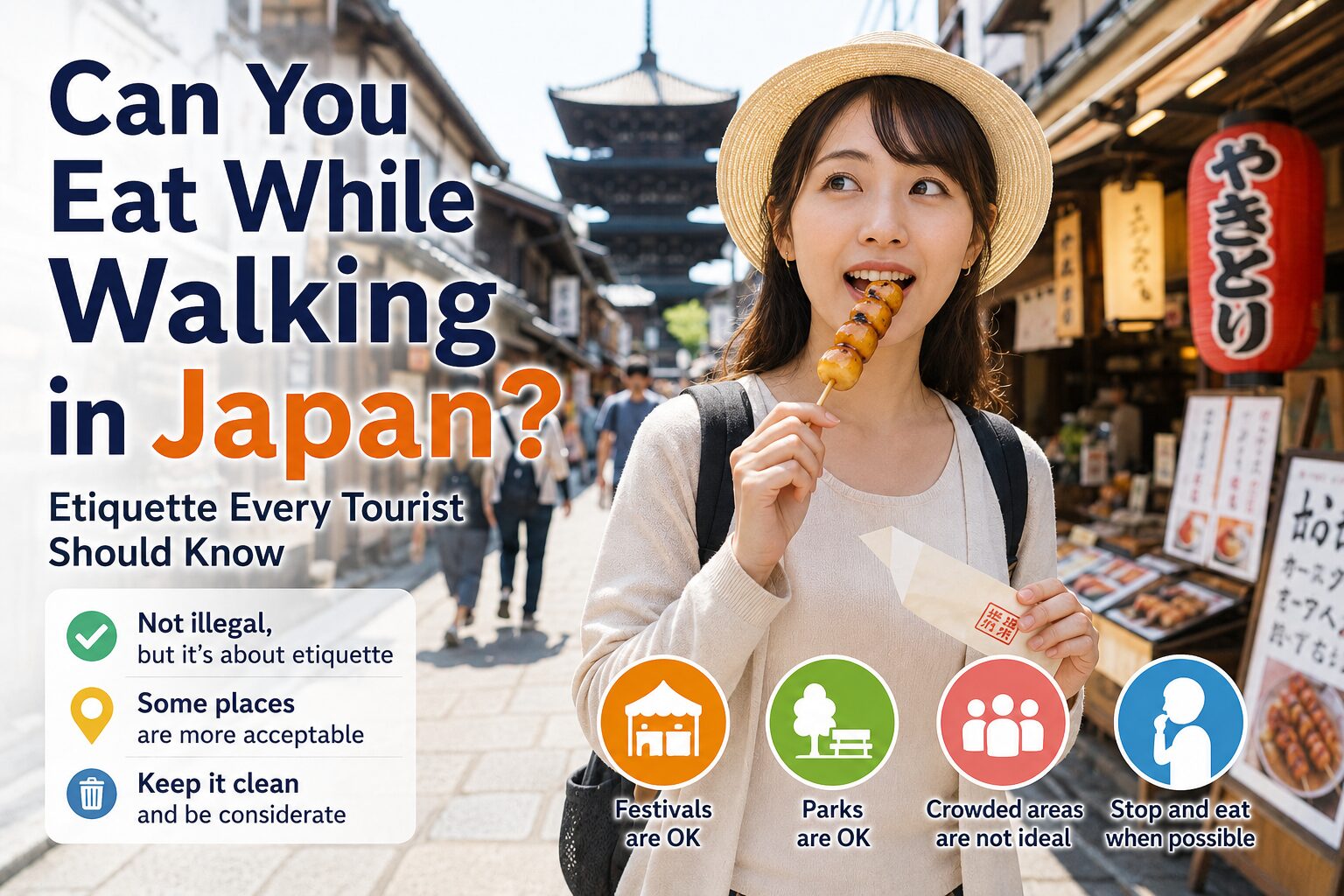
Yes, you can eat while walking in Japan, but it is often better to stop and eat in an appropriate place rather than continue walking through a busy street.
Eating while walking is not generally illegal, and visitors are unlikely to get into trouble simply for carrying a snack. However, Japanese food etiquette often places importance on avoiding spills, litter, strong smells, and inconvenience to other people.
This article explains when eating while walking may feel inappropriate, where it is commonly accepted, and how tourists can enjoy street food without causing problems during their trip.
Quick Answer
Eating while walking in Japan is usually not prohibited, but it may be viewed as inconsiderate in crowded places. The safest approach is to stand near the shop, use a designated eating area, or find a bench before eating.
1. Is It Rude to Eat While Walking in Japan?
Eating while walking is not automatically considered rude in every situation. The reaction depends on the location, the type of food, the number of people nearby, and whether your actions affect others.
A person eating a small snack on a quiet street may attract little attention. However, eating messy food while moving through a crowded station, shopping street, or narrow sidewalk may be seen as poor manners.
1-1. It is a matter of etiquette rather than a nationwide ban
There is no general rule that makes eating while walking illegal throughout Japan.
Instead, the issue is mainly connected to courtesy. Food can spill onto clothing, create litter, block pedestrian traffic, or inconvenience people in crowded public areas.
Some tourist districts, shopping streets, temples, or private facilities may also display their own signs asking visitors not to eat while walking.
1-2. Crowded places require extra care
Japan’s major train stations, department stores, and popular sightseeing areas can become extremely crowded.
Walking with hot, oily, or sauce-covered food increases the risk of bumping into someone or staining another person’s clothes.
For this reason, it is better to finish your food before entering a crowded station or moving through a narrow pedestrian area.
1-3. Food type also makes a difference
A wrapped candy, small piece of bread, or bottled drink is less likely to cause problems than ramen, ice cream, grilled meat, or food covered in sauce.
Strong-smelling or messy foods are better eaten near the shop, at a table, or in a designated rest area.
Even when a snack is easy to carry, stopping briefly to eat is often the more considerate choice.
Key Takeaway: Eating while walking is not universally forbidden in Japan, but tourists should avoid doing it in crowded places or with messy food. Stopping near the shop or using a designated eating area is usually the safest choice.
2. Where Is It Acceptable to Eat While Walking?
Although eating while walking is often discouraged in busy public areas, there are several situations where it is widely accepted. Understanding these exceptions can help you enjoy Japanese food while respecting local customs.
In many cases, the best approach is to observe what local people are doing. If most people are standing still while eating, it is a good idea to do the same.
2-1. Street food markets and festivals
Food stalls at festivals, seasonal events, and street markets are popular places to enjoy local snacks. Visitors often walk short distances while eating, although many people still pause near the stall or gather in nearby open spaces.
Because these events are designed around food, eating in these areas is generally considered more acceptable than on an ordinary city sidewalk.
2-2. Shopping streets with designated eating areas
Some shopping streets and tourist attractions provide benches, tables, or designated spaces where visitors can enjoy food purchased nearby.
If these areas are available, using them is usually the most considerate option and helps keep walkways clear for other pedestrians.
2-3. Quiet parks and open spaces
Parks and public squares are often comfortable places to enjoy a snack, especially if benches or picnic areas are provided.
Remember to dispose of your trash properly or take it with you if no trash bins are available.
| Location | Recommended? | Reason |
|---|---|---|
| Festival food stalls | ✅ Yes | Designed for enjoying street food. |
| Tourist areas with benches | ✅ Yes | Eating spaces are often provided. |
| Parks | ✅ Yes | Suitable if you clean up after yourself. |
| Busy train stations | ❌ No | Crowded and easy to disturb others. |
| Narrow shopping streets | ⚠️ Better to stop first | Avoid blocking pedestrians or spilling food. |
Key Takeaway: Eating while walking is more acceptable at festivals, food markets, parks, and places with designated eating areas. In crowded streets or stations, stopping before eating is usually the more respectful choice.
3. Popular Exceptions to the Rule
While many travelers hear that eating while walking is considered poor manners in Japan, there are several well-known exceptions. In these situations, eating on the spot—or even while slowly walking—is much more common.
The key is to pay attention to the local environment and follow the behavior of the people around you.
3-1. Traditional festivals (Matsuri)
Japanese festivals are famous for their food stalls selling items such as takoyaki, yakisoba, grilled seafood, candied fruit, and shaved ice.
Visitors often enjoy these foods while moving around the festival grounds. Even so, many people stop near the stall or move to an open area before eating.
3-2. Famous street food destinations
Popular tourist destinations such as Nakamise Shopping Street in Tokyo, Dotonbori in Osaka, and Nishiki Market in Kyoto attract visitors who come specifically to enjoy local food.
Some shops encourage customers to eat nearby, while others ask visitors not to walk away with food. Looking for signs or following staff instructions is always a good idea.
3-3. Food purchased from convenience stores
Many travelers buy snacks or drinks from convenience stores while sightseeing.
Instead of eating immediately on the sidewalk, many people choose to sit in a nearby park, use a rest area, or wait until they reach their destination. This approach is generally more consistent with local etiquette.
Travel Tip
- Watch how local people eat in the same area.
- Follow signs posted by shops or tourist attractions.
- If in doubt, stop and enjoy your food before continuing your walk.
Key Takeaway: Festivals, street food districts, and some tourist areas are common exceptions where eating is more relaxed. Even there, respecting local rules and eating near the shop is often appreciated.
4. Tips to Avoid Cultural Mistakes
Following a few simple etiquette tips can help you enjoy Japan’s food culture while showing respect for local customs.
These habits are easy to remember and can make your travel experience smoother.
4-1. Eat near the shop whenever possible
Many food stalls and specialty shops expect customers to enjoy their food nearby rather than carry it through busy streets.
If tables, benches, or standing areas are available, use them before continuing your sightseeing.
4-2. Keep public spaces clean
Public trash bins are less common in Japan than in many other countries. Carry a small bag for your trash if you cannot find a bin nearby.
Leaving litter behind is considered much more disrespectful than simply eating while walking.
4-3. Be aware of people around you
Avoid eating while walking through crowded sidewalks, train stations, or queues where food or drinks could accidentally spill onto others.
Taking a short break to finish your snack is often the most considerate choice.
Key Takeaway: Respecting local etiquette is simple: stop before eating, dispose of your trash responsibly, and avoid disturbing people around you. These small actions are appreciated throughout Japan.
5. Final Thoughts on Eating While Walking in Japan
Eating while walking is not strictly prohibited in Japan, but understanding local etiquette can help you enjoy your trip more comfortably and respectfully.
In most situations, simply stopping for a moment before eating is considered more polite than continuing to walk. This small habit helps keep public spaces clean, avoids disturbing others, and matches the customs that many local people follow.
When visiting festivals or famous street food areas, pay attention to signs and observe what people around you are doing. Following local practices is one of the easiest ways to experience Japanese culture with confidence.
Quick Summary
- Eating while walking is generally a matter of etiquette, not law.
- Avoid eating while walking in crowded stations and busy shopping streets.
- Festivals and street food areas are common exceptions.
- Use designated eating areas or stand near the shop whenever possible.
- Take your trash with you if no bin is available.
- Following local customs helps create a better travel experience.
Key Takeaway: Tourists are welcome to enjoy Japan’s amazing food culture. By stopping to eat, keeping public spaces clean, and respecting local etiquette, you can enjoy street food while making a positive impression.
Frequently Asked Questions (FAQ)
Is it illegal to eat while walking in Japan?
No. There is no nationwide law that prohibits eating while walking. It is generally considered a matter of local etiquette rather than a legal issue.
Can tourists eat street food while sightseeing?
Yes. Street food is popular in many tourist areas and festivals. However, it is often recommended to eat near the shop or in a designated eating area instead of walking through crowded streets.
Why do many Japanese people avoid eating while walking?
Many people prefer to avoid spilling food, creating litter, or disturbing others in public. Stopping to eat is commonly viewed as a more considerate practice.
Are there places where eating while walking is acceptable?
Yes. Festivals, food markets, parks, and some tourist attractions are places where eating while walking or eating nearby is more common. Always check for local signs and follow any instructions from the shop.
What should I do with my trash?
If you cannot find a public trash bin, keep your trash with you until you find one or return it to the shop if appropriate. Carrying a small trash bag is a convenient option for travelers.