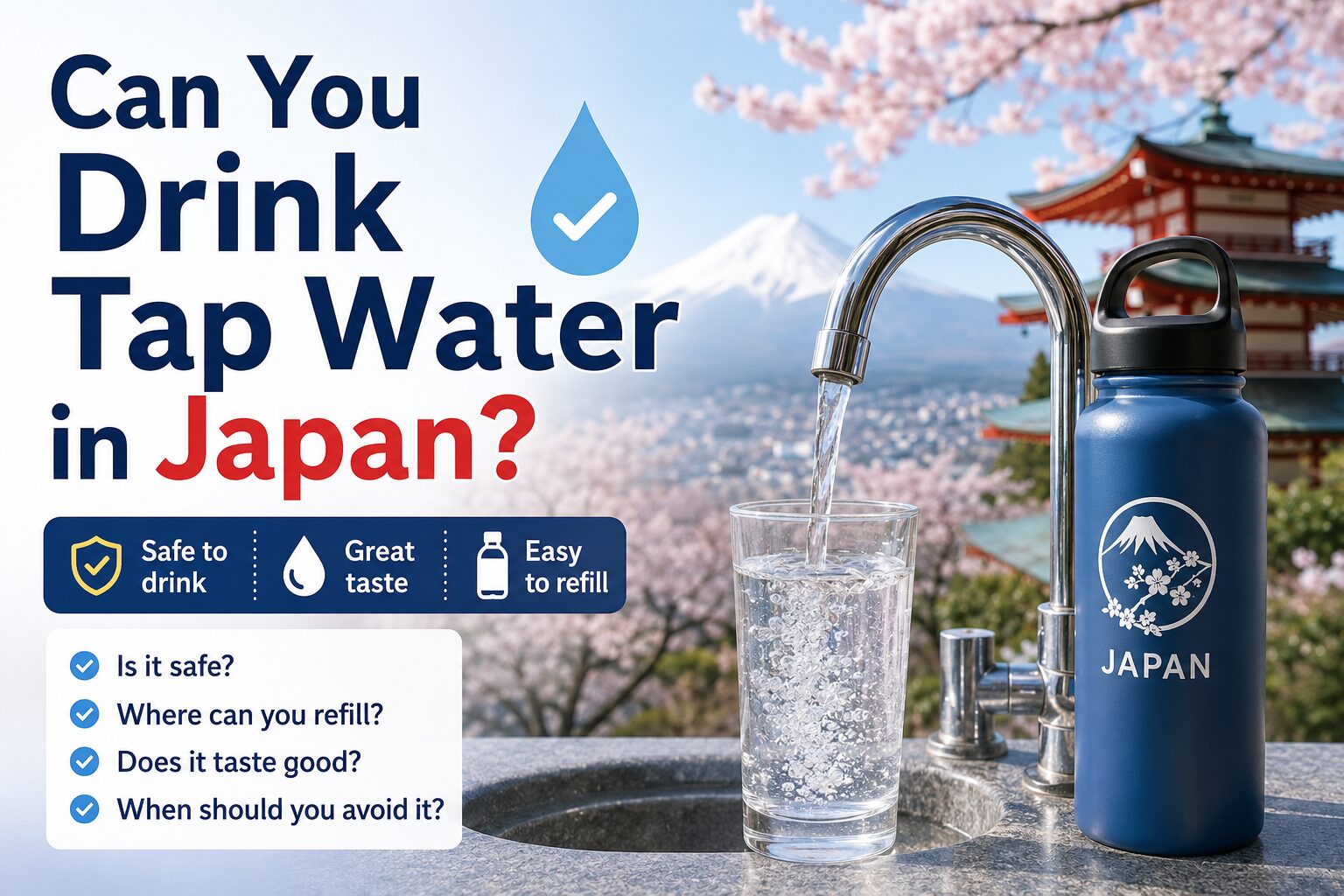
Can You Drink Tap Water in Japan? Safety, Taste and Travel Tips
Can You Drink Tap Water in Japan?
Yes, tap water is generally safe to drink throughout Japan. Tourists can normally drink water directly from taps in hotels, restaurants, public facilities, and private homes.
This can be reassuring for travelers who want to refill a reusable bottle, reduce spending on bottled water, or stay hydrated during Japan’s hot and humid summer.
However, the taste may vary slightly by location, building, and plumbing system. This article explains how safe Japanese tap water is, what it tastes like, where you can refill your bottle, and when you should avoid drinking from a particular tap.
Quick Answer
Tap water is safe to drink in most parts of Japan unless a sign specifically says otherwise. You can usually drink water from hotel room taps, restaurant taps, and public drinking fountains. Bottled water is widely available, but it is generally not necessary for safety.
1. Is Tap Water in Japan Safe to Drink?
Yes. Tap water supplied through Japan’s public water systems is treated and monitored under national water-quality standards.
For most travelers, there is no need to boil Japanese tap water or rely entirely on bottled water. You can normally drink it directly from the faucet unless the property or facility provides a warning.
1-1. Japan has national drinking-water standards
Water suppliers are required to manage and test water quality before it reaches homes, hotels, restaurants, and public facilities.
Water is checked for substances and conditions that could affect safety, including microorganisms, chemicals, odor, color, and clarity.
Local water authorities may also conduct additional monitoring within their own supply areas.
1-2. Tourists can normally drink hotel tap water
Tap water in most Japanese hotels, guesthouses, and apartments comes from the same regulated public water supply used by local residents.
In most cases, water from the bathroom sink is drinkable. A hotel may place bottled water in the room as a complimentary service, but this does not usually mean the tap water is unsafe.
If a tap is not intended for drinking, the accommodation should display a warning or provide separate instructions.
1-3. Restaurants commonly serve water for free
Japanese restaurants commonly provide customers with complimentary water or tea.
The water may come directly from the local tap supply or pass through a restaurant filtration system. In either case, customers do not normally need to order bottled water with a meal.
Key Takeaway: Tap water is generally safe for tourists to drink throughout Japan. Bottled water remains a matter of taste and convenience rather than a basic safety requirement.
2. What Does Tap Water in Japan Taste Like?
Japanese tap water is safe to drink, but many travelers are also curious about its taste. The flavor can vary depending on the region, the source of the water, and the plumbing in the building.
Most visitors find the taste clean and refreshing, while others may notice a slight chlorine flavor similar to tap water in many other developed countries.
2-1. Most tap water has a clean and mild taste
Many areas of Japan use rivers, reservoirs, or groundwater as drinking-water sources. After treatment, the water is supplied through local distribution systems that meet national quality standards.
In many cities, especially where water infrastructure is modern, visitors describe the taste as fresh, neutral, and easy to drink.
2-2. You may notice a slight chlorine smell
Like many countries, Japan disinfects tap water with chlorine to keep it safe while it travels through the distribution system.
Some people can notice a faint chlorine smell or taste, although it is usually much less noticeable when the water is cold.
If you are sensitive to the taste, chilling the water in the refrigerator or using a reusable bottle with a filter may improve the flavor.
2-3. Taste can vary from one building to another
Even within the same city, tap water may taste slightly different depending on the building’s plumbing system or water storage facilities.
Modern hotels and newer buildings often provide water with a cleaner taste, while older buildings may occasionally have a slight metallic or mineral flavor. This difference usually affects taste rather than safety.
Key Takeaway: Japanese tap water is generally clean, safe, and pleasant to drink. Although the taste may vary slightly by location or building, most travelers can enjoy it without needing bottled water.
3. Where Can You Refill Your Water Bottle in Japan?
Finding safe drinking water is easy in Japan. Whether you are sightseeing in a city or traveling by train, there are many places where you can refill your reusable water bottle.
Knowing where to refill can help you save money, reduce plastic waste, and stay hydrated throughout your trip.
3-1. Hotels are the easiest place to refill your bottle
Most hotels in Japan provide safe tap water in guest rooms and bathrooms. Before leaving for the day, many travelers simply fill their reusable bottle at the hotel.
This is one of the easiest and most reliable ways to stay hydrated without purchasing bottled water.
3-2. Public drinking fountains are available in some locations
You may find drinking fountains at parks, major train stations, airports, museums, sports facilities, and other public buildings.
Although they are less common than in some countries, these fountains usually provide safe drinking water and are intended for public use.
3-3. Cafés and restaurants can also be convenient
Many restaurants in Japan serve complimentary water to customers. While this water is generally intended for drinking during your meal, some cafés may allow you to refill your bottle if you ask politely.
If you are unsure, simply asking a staff member is considered good manners.
| Location | Can You Refill? | Notes |
|---|---|---|
| Hotel | Yes | The easiest and most reliable option. |
| Public drinking fountain | Yes | Available at some stations, parks, airports, and public facilities. |
| Restaurant or café | Sometimes | Ask staff before refilling your bottle. |
| Convenience store | No | Most stores sell bottled water rather than provide refill stations. |
Key Takeaway: The easiest places to refill your water bottle are your hotel, public drinking fountains, and—when permitted—restaurants or cafés. Carrying a reusable bottle is both convenient and environmentally friendly while traveling in Japan.
4. Are There Any Times You Should Avoid Drinking Tap Water?
Tap water in Japan is generally safe to drink. However, there are a few situations where you should be more careful, just as you would in any other country.
These situations are uncommon, but knowing them can help you travel with confidence.
4-1. Do not drink water from taps marked “Not Drinking Water”
Some taps in parks, construction sites, industrial facilities, or maintenance areas are not intended for drinking.
If you see signs such as “Not Drinking Water” or “Non-potable Water”, use the water only for washing and find another source for drinking.
4-2. Water quality may be affected during emergencies
Following major earthquakes, floods, or other natural disasters, local authorities may temporarily advise residents not to drink tap water until safety inspections are completed.
If you are traveling during an emergency, always follow official announcements from local authorities or your accommodation.
4-3. Very old or unused plumbing can affect water quality
In rare cases, water from pipes that have not been used for a long time may have an unusual smell or taste when the tap is first turned on.
If this happens, letting the water run briefly before drinking is often recommended by property managers. If the water still looks cloudy or has an unusual odor, ask the accommodation staff for advice.
When should you avoid drinking tap water?
- The tap is clearly marked as non-drinking water.
- Local authorities issue a temporary safety advisory after a natural disaster.
- The water has an unusual color, smell, or appearance that does not improve.
Key Takeaway: Under normal circumstances, tap water throughout Japan is safe to drink. The main exceptions involve clearly marked non-potable taps, temporary emergency advisories, or water that appears abnormal.
5. Final Tips for Drinking Tap Water in Japan
For most visitors, drinking tap water in Japan is both safe and convenient. Carrying a reusable water bottle allows you to stay hydrated, reduce plastic waste, and save money during your trip.
By understanding where to refill your bottle and when to use caution, you can enjoy your travels with confidence.
Quick Travel Tips
- Drink tap water with confidence in most hotels, restaurants, and public facilities.
- Carry a reusable water bottle for easy refills.
- Use public drinking fountains when available.
- Check for warning signs before drinking from unfamiliar taps.
- Follow official guidance during natural disasters or emergencies.
Key Takeaway: Japan is one of the countries where travelers can generally drink tap water safely. With just a few simple precautions, you can enjoy clean drinking water throughout your visit without relying on bottled water.
Frequently Asked Questions (FAQ)
Can tourists safely drink tap water in Japan?
Yes. In most parts of Japan, tap water is safe for both residents and tourists. Hotels, restaurants, and public facilities usually provide drinking-quality tap water unless a sign indicates otherwise.
Do I need to buy bottled water while traveling in Japan?
Not necessarily. Many visitors drink tap water throughout their trip without any problems. Bottled water is widely available if you prefer the taste or want extra convenience.
Can I refill my reusable water bottle in Japan?
Yes. Hotels are the easiest place to refill your bottle. Some parks, airports, train stations, and public facilities also have drinking fountains, and certain cafés may allow refills if you ask politely.
Why does tap water sometimes taste like chlorine?
A small amount of chlorine is used to disinfect drinking water and keep it safe while it travels through the water supply system. The taste is usually mild and often less noticeable when the water is cold.
When should I avoid drinking tap water in Japan?
Avoid drinking from taps marked as non-potable or “Not Drinking Water.” You should also follow official guidance if local authorities issue temporary water safety advisories after a natural disaster.