Why Are There So Few Trash Cans in Japan? Reasons and Travel Tips
Why Are There So Few Trash Cans in Japan?
Japan is known for its clean streets, but visitors are often surprised by how difficult it can be to find a public trash can.
After buying a drink, snack, or convenience-store meal, you may end up carrying the empty packaging for much longer than expected.
This article explains why public trash cans are limited in Japan, where tourists can usually dispose of waste, and what you should do when no bin is nearby.
Quick Answer
Japan has relatively few public trash cans because of security concerns, maintenance costs, strict waste-sorting rules, and the common expectation that people carry their own trash home. Travelers can sometimes find bins at train stations, shopping centers, tourist facilities, convenience stores, and beside vending machines. However, availability varies, so carrying a small bag for your trash is the safest option.
1. Why Does Japan Have So Few Public Trash Cans?
There is no single reason why public trash cans are difficult to find in Japan. The current situation developed through a combination of security measures, waste-management costs, local sorting rules, and everyday social habits.
1-1. Security concerns led to the removal of some bins
Security is one important part of the explanation. After serious incidents, including the 1995 Tokyo subway sarin attack, some railway operators and public facilities removed or restricted unattended trash cans.
Bins can potentially be used to hide suspicious objects, so transport facilities may reduce access to them during major events or periods of heightened security.
However, it would be inaccurate to say that one event alone caused the shortage of trash cans across the entire country. Public bins are managed by different railway companies, local governments, businesses, and facility operators, and their policies vary by location.
1-2. Public bins are expensive to manage
A public trash can requires more than simply placing a container on the street. It must be emptied, cleaned, inspected, and protected from overflowing.
Staff must also deal with waste that has been placed in the wrong compartment. In busy areas, this can require frequent collection and additional maintenance.
For local governments and private operators, reducing the number of bins can lower cleaning and waste-management costs.
1-3. Japan has detailed waste-sorting rules
Japan commonly separates waste into categories such as burnable trash, plastic bottles, cans, and glass bottles.
The exact rules differ between municipalities and facilities. This makes public waste collection more complicated because visitors may mix different types of trash in the same bin.
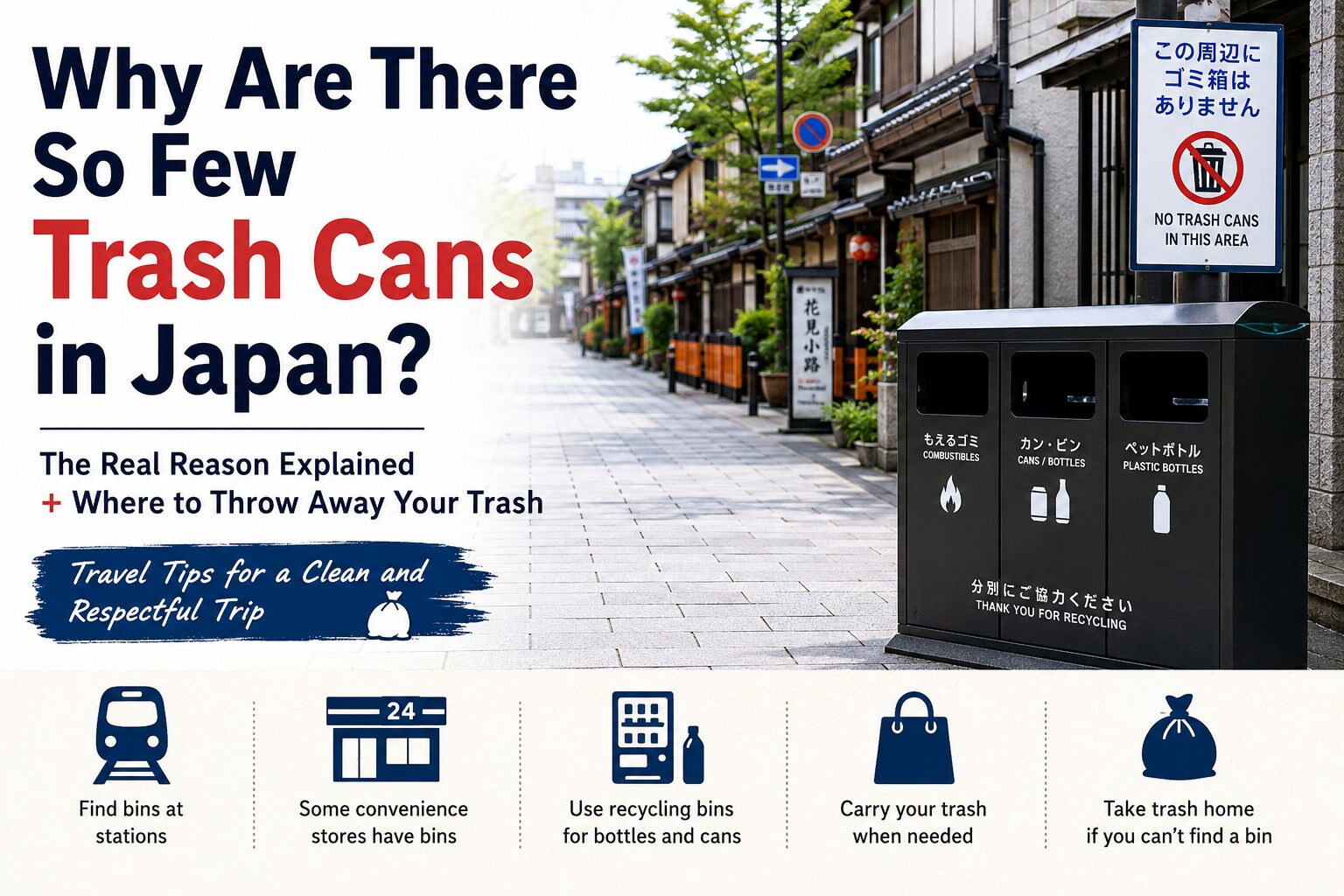
Many public bins therefore have several clearly marked openings. When using one, travelers should follow the pictures and labels instead of relying only on the color of the container.
Key point: Japan’s limited number of public trash cans cannot be explained by security alone. Maintenance costs, sorting requirements, local policies, and personal responsibility all play a role.
2. Why Are Japan’s Streets Still So Clean?
At first glance, Japan’s streets may seem almost spotless despite the shortage of public trash cans. Many visitors naturally wonder how this is possible.
The answer is not that Japan has a secret cleaning system. Instead, several everyday habits help keep public spaces clean.
2-1. Many people take their trash home
One of the biggest differences compared with many other countries is that carrying your own trash is considered completely normal in Japan.
Whether someone finishes a drink while walking or eats lunch in a park, they often keep the empty container in their bag until they find an appropriate place to dispose of it.
Because this habit is widely accepted, fewer public trash cans are needed than many visitors expect.
2-2. Respect for shared public spaces
People in Japan generally try to avoid creating extra work for others. Public places such as stations, sidewalks, parks, and shopping areas are treated as spaces that everyone should keep clean together.
While littering certainly still happens, most people prefer to dispose of waste properly rather than leave it behind.
This shared attitude plays an important role in maintaining clean streets.
2-3. Cleaning begins at an early age
Many Japanese children participate in classroom and school cleaning activities. These routines help teach responsibility for shared spaces from a young age.
Although this is only one part of Japanese culture, it contributes to an understanding that keeping public areas clean is everyone’s responsibility.
Key takeaway: Japan’s clean streets are not the result of having more cleaners or more trash cans. Everyday habits, personal responsibility, and respect for shared spaces all contribute to a cleaner environment.
3. Where Can Tourists Throw Away Trash in Japan?
Although public trash cans are limited, they have not disappeared completely. Knowing where to look will save you time and frustration during your trip.
| Location | Can You Usually Find Trash Bins? | Notes |
|---|---|---|
| Train stations | Often | Usually near ticket gates or platforms. |
| Convenience stores | Sometimes | Some stores keep bins inside rather than outside. |
| Shopping malls | Yes | Food courts usually provide waste stations. |
| Tourist attractions | Usually | Museums, theme parks, and major attractions often have bins. |
| Vending machines | Yes | Only for drink containers unless otherwise indicated. |
3-1. Convenience stores may have customer trash bins
Some convenience stores provide trash bins for customers who purchase food or drinks there. However, many stores have moved their bins indoors or removed them entirely.
If you cannot find one, do not assume the store accepts outside trash. When in doubt, politely ask a staff member.
3-2. Vending machine bins are not general trash cans
Many visitors mistake vending machine recycling bins for ordinary trash cans.
In most cases, these containers are designed specifically for empty cans, plastic bottles, or glass bottles. Food wrappers, tissues, and other household waste should not be placed inside unless the label clearly allows it.
3-3. Hotels are often the easiest option
If you cannot find a suitable bin during the day, simply keep your trash with you and dispose of it after returning to your hotel.
Most accommodations provide room trash bins, making this the easiest solution for everyday travel waste.
Traveler Tip: Carrying one small reusable plastic bag in your backpack makes sightseeing much more comfortable when public trash bins are difficult to find.
4. Common Mistakes Tourists Make When Throwing Away Trash
Most visitors want to respect local customs, but many mistakes happen simply because Japan’s waste disposal system is different from what they are used to.
Avoiding the following mistakes will help you travel more comfortably and show respect for local communities.
4-1. Leaving trash beside a full bin
If a trash bin is already full, do not leave your garbage on the ground or next to the container.
Overflowing bins can attract animals, create unpleasant odors, and make extra work for cleaning staff. Instead, keep your trash with you until you find another suitable disposal point.
4-2. Throwing household waste into recycling bins
Recycling stations are designed for specific materials such as plastic bottles, cans, or glass bottles.
Food wrappers, tissues, takeaway containers, and other general waste should not be placed in these bins unless the signs clearly indicate that they are accepted.
4-3. Assuming every convenience store has public trash bins
Many travelers expect every convenience store to provide outdoor trash bins, but this is no longer the case.
Some stores have moved their bins inside, while others have removed them completely. Availability varies depending on the location and store policy.
4-4. Carrying drinks with liquid still inside
Before placing a bottle or can into a recycling container, finish the drink whenever possible.
Containers filled with leftover liquid can leak, create odors, and contaminate recyclable materials.
Avoid these common mistakes:
- Leaving trash beside a full bin.
- Using recycling bins for general waste.
- Expecting every convenience store to accept trash.
- Throwing away bottles that still contain liquid.
5. Practical Tips for Traveling Without Public Trash Cans
Once you know what to expect, dealing with trash in Japan becomes much easier. A few simple habits can prevent inconvenience throughout your trip.
5-1. Carry a small reusable trash bag
A lightweight reusable bag or a few small plastic bags take up almost no space in your backpack.
They are useful for wrappers, tissues, snack packaging, and other small items until you find an appropriate place to dispose of them.
5-2. Dispose of trash where you buy food or drinks
Food courts, cafés, and some convenience stores often provide waste stations for customers.
If you purchased your meal there, using those designated bins is usually the easiest option.
5-3. Plan ahead before a full day of sightseeing
If you know you will spend several hours exploring parks, temples, or shopping streets, expect that you may not find a public trash bin for some time.
Preparing in advance makes the experience much more comfortable and reduces unnecessary stress.
Quick Travel Checklist
- Carry a small trash bag.
- Finish drinks before recycling bottles or cans.
- Use customer bins when available.
- Follow sorting labels carefully.
- Take small amounts of trash back to your hotel if necessary.
Frequently Asked Questions (FAQ)
Why are there so few public trash cans in Japan?
Japan has relatively few public trash cans because of several factors, including security concerns, waste-management costs, detailed recycling rules, and the common practice of carrying personal trash until an appropriate disposal location is available.
Can tourists use convenience store trash bins?
Sometimes. Some convenience stores provide trash bins for customers, while others have moved them indoors or removed them altogether. Availability depends on the individual store, so it is best to ask a staff member if you are unsure.
Are the bins next to vending machines for all types of trash?
No. Most vending machine bins are intended only for empty drink containers such as plastic bottles, cans, or glass bottles. Food wrappers and other general waste should not be placed there unless the signs clearly indicate otherwise.
What should I do if I cannot find a trash can?
The easiest solution is to carry your trash with you until you find an appropriate bin. Many travelers keep a small reusable bag for this purpose and dispose of their waste later at a hotel, shopping mall, or another designated location.
Is it rude to carry trash around in Japan?
Not at all. Carrying your own trash is completely normal in Japan and is considered a responsible way to help keep public spaces clean.